Entertainment
Nathan Fielder's Sprawling Documentary Probes the Mind of Convicted Theranos Founder Elizabeth Holmes
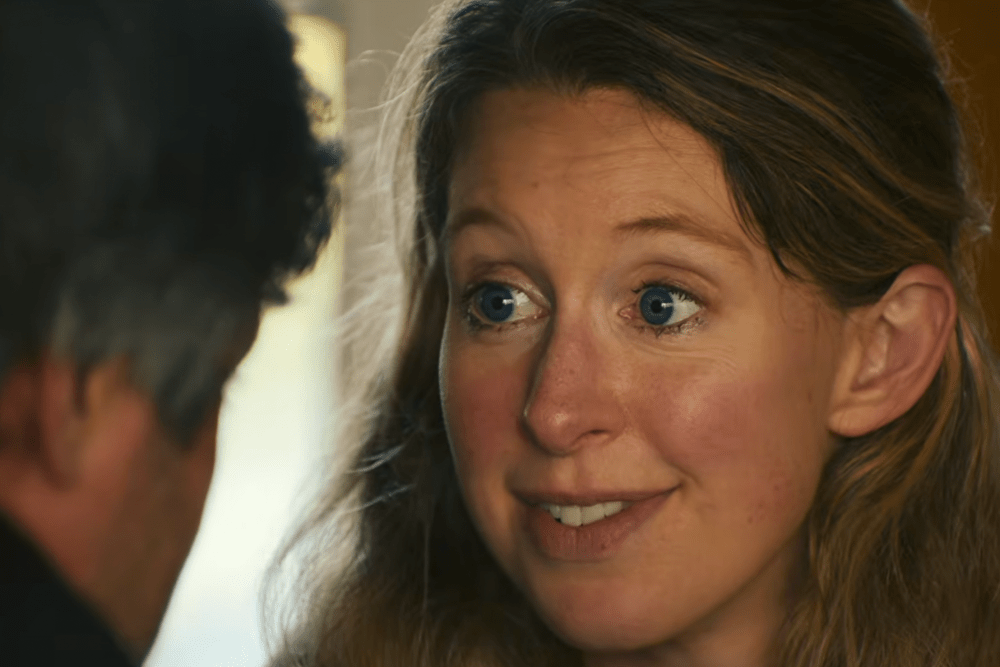
A previously unannounced film screened at the Telluride Film Festival has generated significant buzz after being revealed as "You Can See Everything," a 174-minute documentary co-directed by comedian Nathan Fielder centered on Elizabeth Holmes, the former Theranos CEO now serving an 11-year prison sentence for defrauding investors.
The film defies conventional documentary form, blending reality television, hangout-movie sensibilities, and psychological drama. Fielder, known for shows like "The Curse" and "The Rehearsal," approaches the project not to relitigate Holmes' guilt but to understand her psychology and motivations.
According to the film's account, after her conviction Holmes largely avoided public attention. However, shortly before beginning her prison term, she reportedly wanted her final days of freedom documented. Fielder, who had been seeking a collaborative project with documentarian Lance Oppenheim, took on the task with backing from A24, despite uncertainty about the project's direction.
Thirty-five days before Holmes' 2023 prison sentence began, the filmmakers brought a camera crew to her beachside home in Del Mar, California, where she lived with her partner, hotel heir Billy Evans, and their two children. Fielder spent this time interviewing and observing Holmes in an attempt to understand her mindset.
The documentary depicts Holmes as maintaining she committed no wrongdoing, even when questioned about the crimes for which she was convicted. This stands in contrast to the well-documented history of Theranos, the health technology company Holmes founded that reached a $9 billion valuation in 2015 before being exposed as fraudulent. Holmes had claimed to have invented a device capable of running extensive blood tests using only small blood samples, such as from a finger prick. She secured major investments from figures including Rupert Murdoch and Larry Ellison, and assembled a board featuring former officials George P. Shultz, Henry Kissinger, and James Mattis.
Experts, including Stanford medical professor Phyllis Gardner, had warned Holmes that her concept was scientifically unworkable. Nevertheless, she and business/romantic partner Ramesh "Sunny" Balwani continued promoting the technology, which the film suggests originated from Holmes' personal fear of needles rather than any functioning invention.
In conversations with Fielder, Holmes maintains that the device itself—which she once described as "the iPod of health care"—was fundamentally sound and could theoretically run any blood test; she argues only the underlying chemistry remained unresolved. Fielder's interviewing style, marked by dry skepticism, works to expose the contradictions in this reasoning without directly confronting her.
In one scene, Fielder shows Holmes and Evans the classic Abbott and Costello "Who's on First?" routine, then asks her to explain the joke. She is unable to grasp the wordplay, which the film frames as indicative of her rigid relationship with language and meaning—she insists words mean only what she determines them to mean, paralleling her insistence that her fraudulent technology essentially "worked."
Holmes tells Fielder she has never told a lie, presenting herself with unwavering sincerity throughout their interactions. The documentary suggests the deeper issue extends beyond her fraud conviction to the potential harm her faulty testing device could have caused patients had it reached the market.
In one sequence, Fielder, Holmes, and Evans watch the 2022 Hulu series "The Dropout," which dramatized the Theranos scandal with Amanda Seyfried playing Holmes; Holmes dismisses the portrayal as inaccurate. The film's first half concludes with Holmes departing for a minimum-security prison in Bryan, Texas, where she is no longer accessible for interviews.
With direct access to Holmes cut off, Fielder incorporates actress Amanda Seyfried into the film's second half, having her watch footage of herself portraying Holmes and read transcripts of Holmes' actual statements, including a phone conversation recorded while Holmes was incarcerated. Seyfried's portrayal grows increasingly nuanced, and she reportedly develops some sympathy for Holmes, particularly regarding her partner Bobby's controlling behavior.
The documentary also examines Evans' role in managing Holmes' public image, including his use of an iconic photograph of her making an "OK" gesture on billboards, posting under her name on social media, and negotiating a profit-sharing arrangement with A24 executives—a meeting that is itself included in the film. Holmes reportedly remains unaware of this financial arrangement, though she has claimed indifference to money despite her identity being closely tied to her company's valuation.
The film ultimately avoids constructing a sympathetic defense of Holmes, instead exploring the intersection of reality, performance, deception, and psychological pathology through its unconventional structure.