Politics
China Rejects US Pentagon Report, Accuses It of Fostering Discord with India and Misrepresenting Defence Policies
By admin
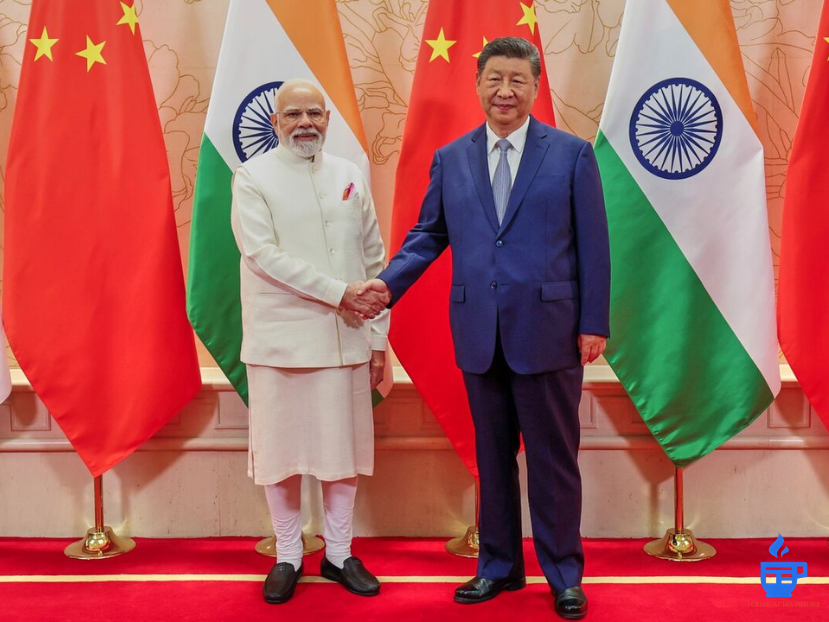
<hr class="wp-block-separator has-alpha-channel-opacity"/> <p><strong>China</strong> has strongly <strong>rejected</strong> a <strong>Pentagon report</strong> that claimed Beijing is leveraging the <strong>reduced border tensions with India</strong> to undermine the growing ties between <strong>India</strong> and the <strong>United States</strong>. The report also highlighted the deepening <strong>defence cooperation</strong> between <strong>China</strong> and <strong>Pakistan</strong>, including potential plans to establish a military base in the country.</p> <p>In response, <strong>Chinese Foreign Ministry</strong> spokesperson <strong>Lin Jian</strong> labeled the Pentagon’s claims as <strong>"irresponsible"</strong>, accusing the report of attempting to create <strong>false narratives</strong> that aimed at <strong>sowing discord</strong> and bolstering <strong>US military supremacy</strong>.</p> <hr class="wp-block-separator has-alpha-channel-opacity"/> <h3 class="wp-block-heading"><strong>China's Position on India-Pakistan Relations</strong></h3> <p>According to <strong>Lin Jian</strong>, China views its relationship with <strong>India</strong> from a <strong>strategic perspective</strong> and remains focused on <strong>strengthening communication</strong>, <strong>trust</strong>, and <strong>cooperation</strong> between the two nations. He stressed that <strong>China</strong> was committed to managing <strong>differences</strong> with <strong>India</strong> through <strong>smooth communication channels</strong>, while asserting that the <strong>current border situation</strong> between the two countries is <strong>stable</strong>.</p> <p>The <strong>US report</strong> had claimed that <strong>China</strong> is capitalizing on the <strong>de-escalation</strong> of tensions along the <strong>Line of Actual Control (LAC)</strong>, where <strong>India</strong> and <strong>China</strong> have had territorial disputes for decades. The report indicated that China’s primary goal is to <strong>stabilize bilateral relations</strong> with <strong>India</strong> and prevent further strengthening of the <strong>US-India relationship</strong>.</p> <hr class="wp-block-separator has-alpha-channel-opacity"/> <h3 class="wp-block-heading"><strong>The Dispute Over Border and Military Developments</strong></h3> <p>The report from the <strong>US Department of War</strong> also pointed out <strong>China’s expanding military presence</strong> and its partnership with <strong>Pakistan</strong> in areas like <strong>defence</strong> and <strong>space</strong>. It raised concerns over <strong>China’s consideration</strong> of setting up additional <strong>military bases</strong> in <strong>Pakistan</strong>, which Beijing did not directly address in its response.</p> <p>The <strong>Chinese Defence Ministry</strong> echoed these sentiments, denouncing the report as a <strong>misrepresentation</strong> of <strong>China’s national defence policy</strong>, accusing the US of <strong>interfering in China’s internal matters</strong>.</p> <figure class="wp-block-image size-large"><img src="/news-images/c7054cb39a50f0b7efe8.png" alt="China rejects Pentagon report India" class="wp-image-494"/></figure> <hr class="wp-block-separator has-alpha-channel-opacity"/> <h3 class="wp-block-heading"><strong>China's Long-term Strategic Outlook</strong></h3> <p>In the wake of the <strong>Pentagon's accusations</strong>, <strong>Chinese Defence Ministry spokesperson Zhang Xiaogang</strong> warned that such reports <strong>distort China’s defence policy</strong> and <strong>mislead</strong> the international community about the real nature of <strong>China's military development</strong>. He also emphasized that the <strong>disputes</strong> over <strong>territorial claims</strong> such as <strong>Arunachal Pradesh</strong> and the <strong>South China Sea</strong> should not be used to fuel unnecessary tension in international relations.</p> <hr class="wp-block-separator has-alpha-channel-opacity"/> <h3 class="wp-block-heading"><strong>China’s Response to US Influence in India</strong></h3> <p><strong>China</strong> also reacted to <strong>US Defence Secretary</strong> <strong>Amit Shah’s</strong> comments about <strong>US-India ties</strong>, asserting that such statements were intended to <strong>intimidate</strong> and <strong>create division</strong> between the two nations. <strong>Lin Jian</strong> concluded by stating that the <strong>US</strong> should refrain from further <strong>provoking confrontation</strong> and instead <strong>allow the countries in the region</strong> to manage their relations independently.</p> <hr class="wp-block-separator has-alpha-channel-opacity"/> <h3 class="wp-block-heading"><strong>Conclusion: Diplomatic Strain and Global Implications</strong></h3> <p>The <strong>India-China</strong> relationship has become a focal point of <strong>geopolitical tension</strong>, with competing interests from <strong>global superpowers</strong> such as the <strong>US</strong> and <strong>China</strong> playing a significant role in shaping the dynamics in <strong>South Asia</strong>. Despite these challenges, <strong>China</strong> remains firm in its commitment to <strong>strategic diplomacy</strong> with <strong>India</strong>, aiming to maintain <strong>peaceful cooperation</strong> while dealing with its broader regional ambitions.</p>