World
Canada Seeks 'Unique' Alliance with EU Amid US Trade Tensions
By Leyland Cecco, Jennifer Rankin
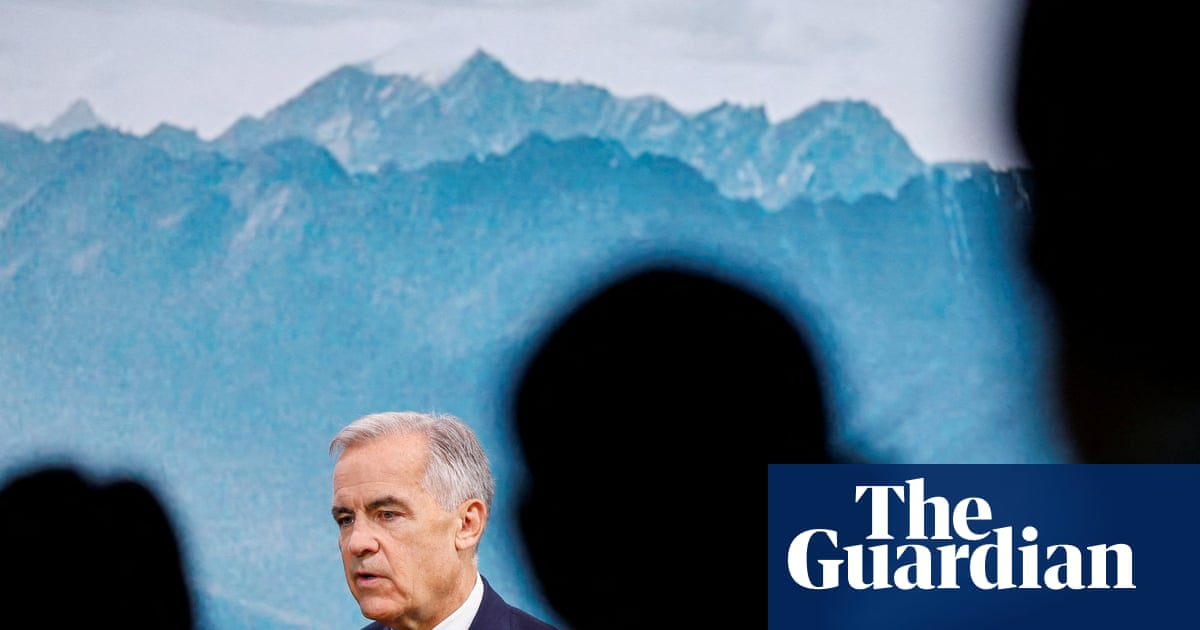
Mark Carney stated that Canada intends to pursue a “unique security and economic alliance” with Europe, positioning the country as a foundation for the “new global economic order.” Speaking at the inaugural Canada Investment Summit on Tuesday, Carney presented Canada as a “safe harbour” and a profitable destination for foreign capital, as his government aims to decrease its reliance on trade with the United States. Over the past 18 months, the relationship with the US has become strained, prompting Canada to seek strategies to prevent economic hardship. Carney remarked, “The world is becoming more divided and dangerous. Sovereignty and openness are now in tension. Economic integration is being weaponised. Tariffs are used as leverage,” referencing Donald Trump’s use of trade levies. He added, “Canada recognised the rupture earlier than most. Our response reflects the two lessons we have taken from it: First, we must take care of ourselves, and second, we must take care of each other. Taking care of ourselves means building our strength at home and diversifying our partnerships abroad.”
While Carney has described the trade dispute as a “war,” senior Canadian officials at the summit expressed optimism that the country’s broader global focus could attract hundreds of billions in new investment. This shift is evident in Carney’s recent efforts to strengthen Canada’s economic and political ties with the EU. During his remarks at the summit, Carney noted that Canada is the only non-European member of Europe’s defense procurement initiative and stated his government will pursue a “unique” relationship with the bloc. He discussed potential opportunities, including visa-free travel and work between Canada and the EU, though he indicated these discussions are in their early stages. Carney will be the guest of honor at the European Parliament’s plenary meeting in Strasbourg this week. He will attend European Commission President Ursula von der Leyen’s annual state of the union speech on Wednesday, where she is expected to outline new areas for EU-Canada cooperation. On Thursday, Carney will address MEPs in von der Leyen’s presence. The commission president altered her plans to remain in Strasbourg after facing criticism for her initial decision to miss Carney’s speech and return to Brussels.
European officials are working to bring Canada as close as possible to the EU without full membership. This will not be termed associate membership, as the EU aims to maintain a clear distinction between members and non-members. The experience of Brexit negotiations reinforced the EU’s preference not to separate the four freedoms of its single market—free movement of people, services, goods, and capital—meaning any deepening of the Canada relationship will adhere to this principle. In the short term, the EU hopes to enhance ties regarding raw materials and energy. Javier Moreno Sánchez, a Spanish socialist MEP and head of the European Parliament’s Canada delegation, expressed his desire to hear “concrete steps” from von der Leyen on improving the EU-Canada relationship. He advocated for increased mobility for professionals, more student exchanges, and joint work on defense and artificial intelligence. Sánchez stated, “Canadians are the most European people outside Europe and that is the key point for the development of our relationship.” He added, “Due to the difficult geopolitical geoeconomic situation in the world and the difficult relationship we have, both Canada and the European Union, with our traditional partner, the United States, I think it is the moment to have a closer relationship with Canada.”
The EU and Canada already share a broad relationship, including a free-trade agreement and separate agreements on digital cooperation, raw materials, research, and a shared green alliance. Earlier this year, Canada became the first non-European country to join the EU’s €150 billion defense loans scheme, providing greater opportunities for Canadian defense firms to supply Europe. However, challenges remain. Ten EU member states, including France, Italy, and Poland, have not ratified the EU-Canada Comprehensive Economic and Trade Agreement (Ceta) nearly a decade after its signing, meaning parts of the deal have not yet taken effect. French lawmaker Valérie Hayer, an ally of Emmanuel Macron in the European Parliament, acknowledged this issue. She stated, “In the French parliament this agreement has yet to be ratified, notwithstanding the [trade] figures which are extremely good. That is why I call on political leaders [in France] to do their bit to act responsibly as elsewhere to make sure that we [the EU] can count for more in world affairs.” Hayer’s centrist Renew group, the fifth-largest in the European Parliament, is urging EU member states and the commission to expedite Ceta ratification and launch an awareness campaign to better inform European and Canadian companies about trade opportunities. However, with significant elections approaching in France, Italy, and Poland, progress on ratifying the 10-year-old agreement appears uncertain.
Trade in goods and services between the EU and Canada reached €130 billion in 2025, an 80% increase since Ceta was signed in 2016. This figure is considerably lower than trade with the US, which is valued at nearly US$880 billion. Despite a deliberate push to increase global trade, Carney acknowledged the geographical reality of Canada’s proximity to its southern neighbor and the consensus among most economists that the US will remain Canada’s largest trading partner. He stated, “We will always be neighbours, and Canada will continue to be the US’s most important partner in many key areas.” He added, “These arrangements work when we engage as true partners that respect each other’s traditions and sovereignty.” In recent weeks, Trump has both threatened Canada’s economy and discussed a North America under an expanded US. Event host Erik Schatzker informed attendees that Canada was neither a “bystander nor a victim” in the geopolitical shifts of the Trump era, stating, “Canada is a protagonist. Canada has agency. Canada is defining its own future.”
Carney reported a dramatic increase in foreign investment and announced that the federal government is on track to balance the operating budget a year ahead of schedule, which was met with applause. He announced a corporate tax “mega-deduction” designed to compete with similar incentives in the US, allowing companies to immediately deduct 100% of the cost of new investment across more assets than previously permitted. Carney also confirmed that Canada would open four of its major airports to foreign investment to “unlock their true value.” The prime minister also stated his government would “apply [the] lessons” from instances where partial private investment had failed. However, the strategy of soliciting hundreds of billions in foreign investment while also re-shoring domestic capability has drawn criticism. Ahead of the summit, thousands gathered in downtown Toronto for the Many vs the Money counter-protest. Organizers argued that public funds should not be used to reduce the risks of private investment while communities bear the social and environmental costs of these projects. Stephen Hill, a lone protester outside the hotel, stated, “Mark Carney’s here selling Canada to the international community. I’m Canadian. We’re an Aboriginal-led investment coalition. We want in. But you can’t get a returned email. You can’t get a returned phone call. You can’t get through to his ministers. So I’m here from British Columbia to try and get his attention and to tell him to think of Canadians first.” Ahead of Tuesday’s summit, the prime minister’s office announced nearly C$500 billion in new domestic investment. Carney stated during a media availability on Tuesday morning, “Canada has what the world wants. The difference, this week, is that we didn’t cross an ocean to make our case. The world came to us … but what matters most is what we do for ourselves.”