Business & Finance
Fuel Prices Stable in Major Indian Cities Amid Global Oil Market Fluctuations
By Livemint
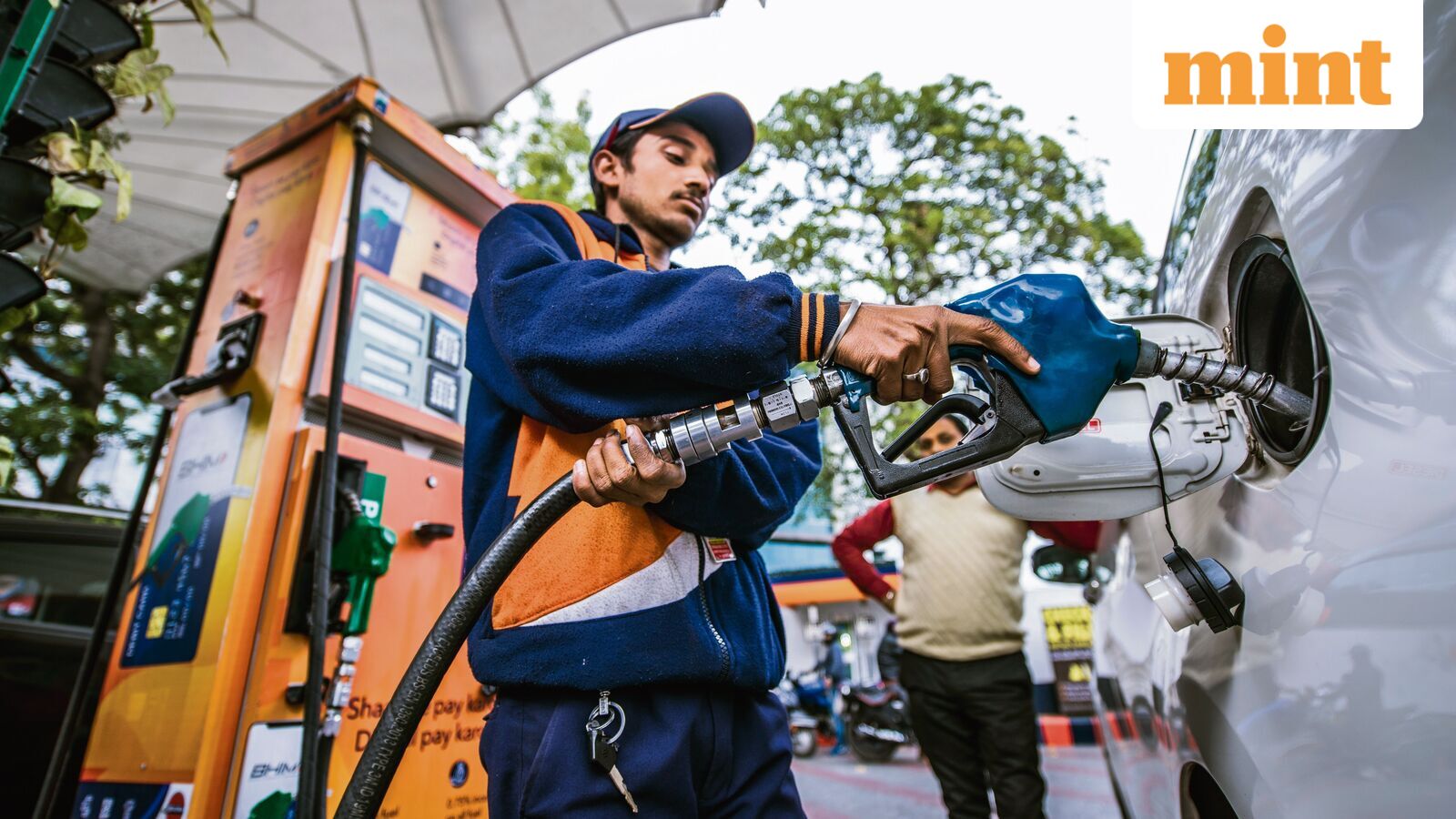
On Wednesday, September 16, fuel prices in India's major metropolitan areas remained unchanged. State-run oil marketing companies maintain steady rates through periodic revisions. Retail fuel prices vary across states due to local value-added tax (VAT), freight charges, and municipal levies. In Mumbai, petrol is priced at ₹111.21 per liter, with no change from the previous day. Petrol prices in Mumbai have recently fluctuated between ₹111.18 and ₹111.21.
State-run Oil Marketing Companies (OMCs) utilize a dynamic fuel pricing method to shield domestic consumers from international energy price volatility. Although fuel rates in India are revised daily at 6:00 AM, they have been stable for three months, reflecting the last significant price adjustment where petrol and diesel increased by ₹2.7 and ₹2.8 per liter, respectively.
Globally, oil prices decreased on Wednesday. Brent crude futures fell by 93 cents, or 0.86%, to $107.82 a barrel by 0028 GMT. US West Texas Intermediate (WTI) futures dropped 97 cents, or 0.92%, to $104.86 a barrel. This decline occurred despite ongoing supply risks after Saudi Arabia suspended oil loadings at its Yanbu port following an attack on the East-West pipeline. Both benchmarks had surged over $3 on Tuesday, reaching their highest levels since May 19, driven by the Yanbu closure and reduced Saudi shipments to Europe.
An unexpected rise in US crude inventories contributed to the global price drop. Data from the American Petroleum Institute (API), cited by Reuters market sources on Tuesday, indicated that US crude inventories grew by 7.1 million barrels for the week ending September 11. This defied analysts' expectations for a 1.6-million-barrel draw. Gasoline and distillate stocks also saw unexpected increases. Haitong Futures noted that while these domestic stock builds pressured prices, regional increases do not negate the underlying tightness of the global crude market.
Saudi Arabia halted oil loadings at the Yanbu port after shutting down its critical East-West pipeline following a Friday attack by Yemen’s Iran-aligned Houthi movement, Reuters sources reported Tuesday. The kingdom uses this pipeline to reroute approximately 4 million barrels per day, about 4% of global supply, to the Red Sea port. While the US energy secretary expressed optimism for a resumption of flows within days, Reuters sources provided mixed projections for the repair timeline, ranging from a quick partial resumption to five or six weeks for complete repairs.