Cyber Awareness
Texas Auto Insurance Fee Meant to Fight Catalytic Converter Theft Funded Thousands of Flock Surveillance Cameras
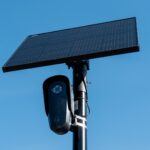
A 2023 Texas law that added $1 to annual auto insurance premiums to combat catalytic converter theft has instead funneled at least $30 million into expanding the state's Flock license plate camera network, according to an analysis by The Texas Tribune. The Motor Vehicle Crime Prevention Authority, overseen by a board mostly appointed by Gov. Greg Abbott, has used the fee to help fund at least 3,200 Flock cameras across Texas.
The agency has awarded at least 95 grants supporting roughly 2,000 Flock cameras for local law enforcement, while a separate $15.9 million contract is helping the Texas Department of Public Safety install nearly 1,200 additional cameras. In early August, the authority approved another $3 million for DPS to add 583 more cameras along state tollways over the next year.
Miguel Rodriguez, chair of the authority and Laredo's police chief, said in 2023 that he hoped proceeds from the fee increase could eventually help cover the entire state with cameras. He described the technology as a critical tool against transnational criminal organizations.
However, following inquiries from the Tribune, Abbott's office announced Friday that the state would pause funding for local grants used to purchase Flock cameras. Spokesperson Andrew Mahaleris said any state agency funds found to be supporting the cameras would be redirected, adding that most city funding for the devices comes from federal sources.
The $1 fee has generated an estimated $81 million overall, with $50.8 million distributed through 234 grants that funded not only cameras but also personnel, drones and other surveillance tools. Individual camera grants ranged from $7,000 for two cameras in Bellmead to nearly $1.7 million for 201 cameras in Dallas. Some cities, including Laredo (165 cameras) and El Paso (150 cameras), had their entire camera networks covered by state grants.
Because the authority does not track how much grant money specifically went toward Flock cameras, the Tribune reviewed board meeting records and documents from 101 city councils and county commissions to estimate the scope of funding. Since 124 grants lacked clear documentation, the actual number of cameras funded is likely higher.
The expansion has sparked backlash, including from lawmakers who supported the original fee increase without knowing it would fund surveillance cameras. State Sen. Carol Alvarado, the bill's author, said she never intended for the fee to support license plate readers, adding she had envisioned funding for more officers or undercover investigations instead. Rep. Jeff Leach, the House sponsor, echoed that surveillance technology was never part of the discussion.
Rep. Mitch Little, R-Lewisville, argued that the scale of data collection raises Fourth Amendment concerns, while Rep. Brian Harrison, R-Midlothian, said he would not have voted for the bill had he known it might fund what he calls warrantless surveillance. Both lawmakers say they plan to introduce legislation next session to restrict use of the cameras.
Flock cameras, the most widely used license plate readers in the country, use artificial intelligence to record each vehicle's plate, make, model, color and distinguishing features, creating a searchable database accessible to law enforcement nationwide without a warrant. The anti-surveillance watchdog group DeFlock estimates there are about 13,000 Flock cameras in Texas, meaning the fee increase may have funded roughly one in four of them. That marks a sharp rise from December 2023, when a Flock representative told the authority the state had about 7,500 cameras. Texas is believed to have the second-highest number of Flock cameras in the country after California.
Law enforcement officials say the cameras have significantly aided investigations. According to the authority, license plate data was searched 62,000 times in 2025, helping clear about 1,660 catalytic converter theft cases. Officers in cities such as Pasadena, Dallas, Temple and Cibolo say the technology has dramatically increased their ability to solve crimes ranging from vehicle theft to drug trafficking.
But criticism has grown alongside the expansion. Kenneth Feagins of DFW DeFlock said he is concerned about police misuse of the extensive data collected. Recent cases include a Lufkin officer indicted in August on 100 counts of misusing official information, along with investigations or discipline involving officers in Baytown, Harris County, Fort Bend County, Temple and Pasadena.
Hannah Foust, founder of DeFlock Carrollton, said the scale of surveillance now exceeds what is needed to address vehicle theft and called for greater transparency from city officials before any new legislation is considered.
Meanwhile, DPS's expanding network — funded in part through the $15.9 million contract — has been used to monitor state borders and areas where local governments have resisted installing their own cameras. Rodriguez has suggested placing DPS cameras in state rights-of-way in communities unwilling to adopt Flock technology themselves, a strategy he says fills law enforcement gaps.
Nearly 100 U.S. cities, including several in Texas such as Bandera and Hood County, have ended their Flock contracts following public backlash over privacy concerns. As criticism intensifies, board members like outgoing DPS Major Sharon Jones have said misinformation about the technology needs to be addressed publicly.
Harrison said he believes state officials should act swiftly to halt the redirection of the insurance fee toward surveillance technology, arguing that lawmakers never intended for the money to be used this way. "I think the Legislature shouldn't take this sitting down," he said. "I think the governor should act on this."